SUSTAINABILITY MATTERS
ABOUT
Julia Rockwell Studio is rooted in care—care for materials, for process, and for the impact my work has beyond the studio. Each piece is created slowly and intentionally, with attention to both its visual presence and its environmental footprint. I strive to make work that reflects a sense of place, mindfulness, and respect for the resources used to create it.
Sustainability is a core influence on both my process and material choices. My background in sustainability—including authoring the book Mothering Earth—and my family’s low-waste lifestyle directly inform how I create, source materials, and package my work. These values shape my practice and guide my efforts to minimize waste while creating work that is both intentional and accessible.
SOURCING
I source many of my materials from local art supply stores as well as secondhand sources such as SCRAP, a local nonprofit that diverts usable art materials from landfills, along with estate sales and similar reuse-focused outlets.
PACKAGING + SHIPPING
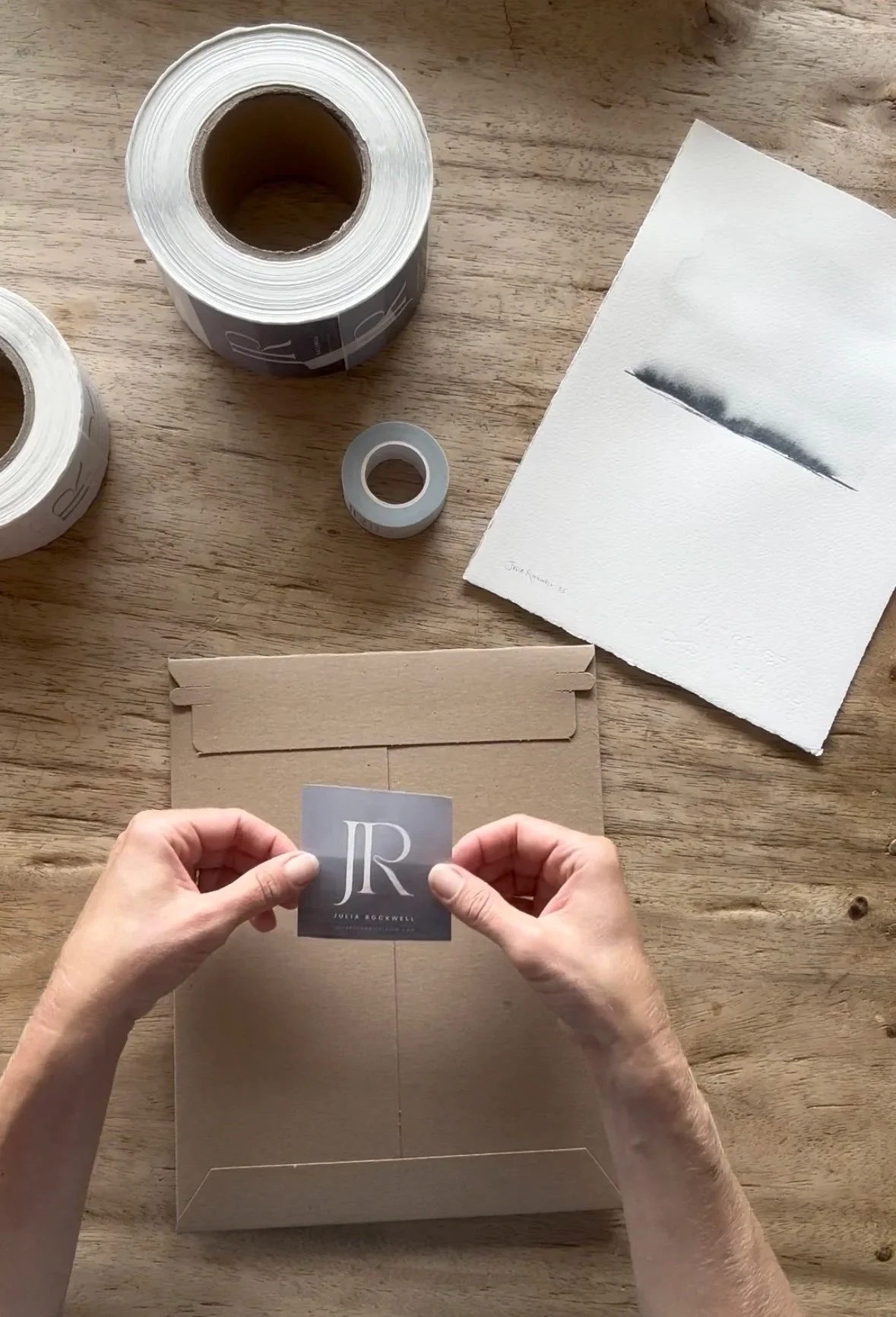
At Julia Rockwell Studio, I aim to limit plastic, whenever possible, and strive to utilize recyclable and compostable materials with eco-friendly inks.
Our branded stickers are curbside compostable or recyclable, printed with soy-based inks on acid-free, cellulose fiber. The branded washi tape we use is made from rice paper and is home or commercially compostable—breaking down 90 to 180 days, respectively. It can also be recycled if composting is not available. Our notecards are also uncoated, meaning they’re silicone and plastic-free, and are printed with soy- and water-based inks.
Unframed original paintings and art prints are shipped in a rigid, flat envelope mailer. The mailers are Kraft (meaning they’re unbleached) and recyclable. If an order contains multiple pieces or a small, framed work, it may be shipped in a recyclable box to ensure quality upon arrival and adequate protection. Framed works may also be packaged with kraft, honeycomb recyclable padding, crinkle paper, and/or biodegradable packing peanuts, depending on the size and care needed for the piece.
Recyclable, kraft chipboard is also used to protect artwork from being bent.
PROGRESS, BUT NOT PERFECTION (YET!)
Transparency is essential to my practice. While I have significantly reduced the use of plastic compared to standard art studio practices, there are still a few areas where it has not been possible to eliminate it entirely. In these cases, I continue to seek a thoughtful balance between sustainability, quality, and longevity.
PLASTIC SLEEVES: At this time, I have not found a solution that protects artwork from weather, handling, and accidental damage while also meeting archival standards without the use of archival plastic sleeves. While compostable bags are appealing, they can degrade over time and may compromise the integrity of the artwork. My concern is that a piece stored in a compostable sleeve for an extended period could be damaged by the sleeve itself. Until a truly archival, non-plastic alternative is available, I have chosen to prioritize the long-term preservation of the artwork.
ART MATERIALS: I prioritize purchasing watercolors that are packaged plastic-free, favoring metal or glass containers whenever possible. On occasion, I do use watercolors that are sold in plastic tubes when no suitable alternative is available. I also make a concerted effort to source art materials secondhand when possible, helping to reduce their overall environmental footprint.
FRAMING: The majority of my work is sold unframed. When I do frame a piece, many of the frames are purchased new rather than handmade. However, I occasionally source frames secondhand—through platforms such as Etsy, the Alameda Flea Market, or Facebook Marketplace—which allows me to pair my work with frames that have character and history, while promoting sustainability. When purchasing new wooden frames, I seek out FSC-certified options when available.
I avoid shipping larger framed works due to the risk of glass breakage and instead offer these pieces exclusively for in-person purchase. While usig acrylic plexiglass for framing is commonly used by artists, in lieu of glass, when shipping larger works, I choose not to use it for sustainability reasons. That said, some of my smaller works are currently sold in acrylic frames, which I acknowledge are not a sustainable solution.